
By James Milburn, Managing Principal — MILBURN Demolition
If you work in development in Chicago or Tampa, you already know what the housing stock looks like. A lot of it is old and a fair amount of it has been sitting on lists longer than it should have. What the data tells us now is that the rest of the country has figured this out too.
According to NAHB analysis of Construction Monitor data, residential demolition permits in 2025 were 34.2% higher than they were in 2018. Activity dipped slightly year over year, but it has leveled off at a high mark, not reversed. Teardown-related projects accounted for about 7% of single-family starts in 2024. In built-out urban markets where there’s no vacant land left, teardowns are often the only way to add supply at all.
Florida is leading the nation, and Tampa is part of the reason why
Florida accounted for 14.6% of all residential demolition permits in the country in 2025 — more than any other state. California was second at 13.3%. Florida’s combination of aging housing stock and continued population growth puts constant pressure on inventory, and developers are responding by tearing down what’s there and rebuilding from the ground up.
In Tampa, that’s playing out at real scale. Robles Park Village, the city’s oldest public housing complex built in the 1950s, came down starting in September 2025. The project is an $800 million redevelopment that will replace 433 aging units with nearly 2,000 mixed-income homes, a community hub, a grocery store, and educational resources. A second large project, a proposed mixed-use development near North Tampa Street and East Ashley Drive, has plans for nearly 1,200 residential units, about 70% designated for affordable and workforce housing, with demolition expected to begin in 2027.
Tampa Mayor Jane Castor has set a goal of creating 10,000 affordable units by 2027. Getting there requires demolition first.
In built-out markets, demolition isn’t just site prep. It’s the only way new supply happens.
Chicago is running the same playbook
Chicago Cityscape data shows 677 demolition permits issued in the city in 2025 and 645 in 2024. Those are elevated numbers, and the City of Chicago’s demolition delay hold lists for both years show consistent activity across wards — masonry residential buildings in North Side neighborhoods, structures tied to mixed-use redevelopment, owner-driven additions and alterations that require partial demolition as a first step.
Much of what’s driving Chicago teardown activity is the same math developers are running in Tampa: the existing structure can’t be economically renovated, the lot is worth more than the building, and the zoning supports something new. When those three conditions align, you call a demolition contractor.
What we look at before a project starts
First, what’s in the structure? Pre-1980 residential buildings in both markets frequently contain asbestos-containing materials and lead paint, and in some cases mercury in older thermostats and fluorescent fixtures. The environmental assessment has to happen before demolition begins. It affects the schedule, the cost, and the compliance obligations for everyone involved.
Second, what are the site constraints? Urban residential demolition means working next to occupied structures, on city streets, often with active utility connections and limited staging area. Protecting adjacent properties, managing debris, and maintaining pedestrian safety requires a plan written before mobilization, not improvised after.
Third, what does the recycling obligation look like? Chicago’s Demolition Debris Diversion ordinance requires contractors to divert a specified percentage of demolition debris from landfill. We build that into scope as standard practice.
If you’re working through a project in either market, get us in early
The earlier we’re looking at a residential demolition scope, the more options we have on sequencing, equipment, and cost. Projects that bring us in after the budget is locked tend to have fewer degrees of freedom.
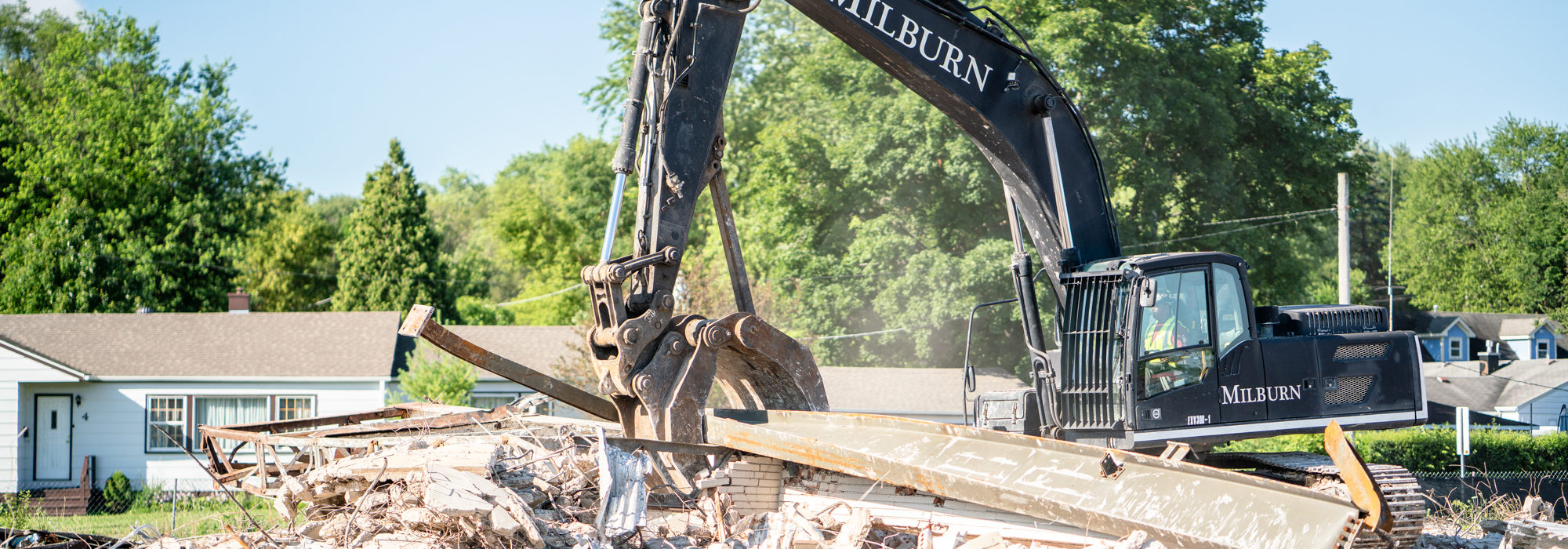
Take a look at our Complete Structure Demolition page for what full teardown work looks like at MILBURN, or reach out through our contact page and we’ll walk through it with you.
— James
Sources: NAHB / Construction Monitor (March 2026), Chicago Cityscape, City of Chicago Department of Buildings, Fox 13 Tampa / WUSF / Bay News 9
Back to all Blogs & News


