
By James Milburn, Managing Principal — MILBURN Demolition
Walk into almost any construction trailer in America and you’ll find a safety slogan taped to the wall. It’s usually printed in red. It usually rhymes. And it may get ignored the second the schedule starts to slip.
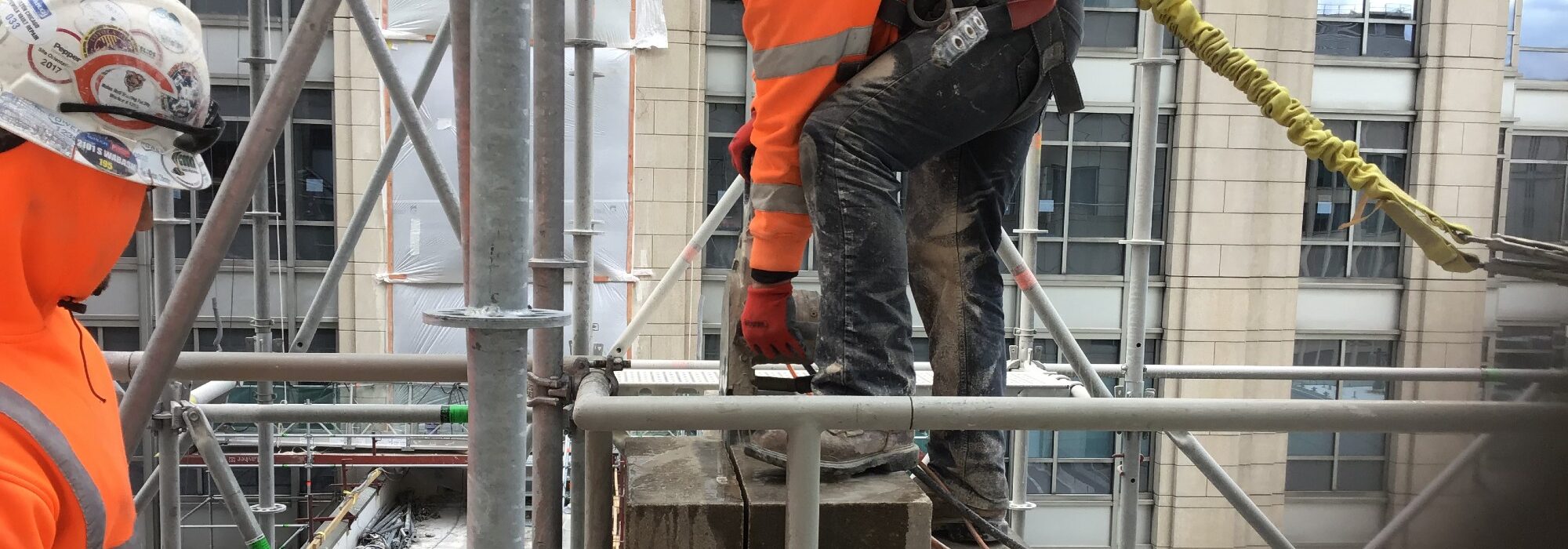
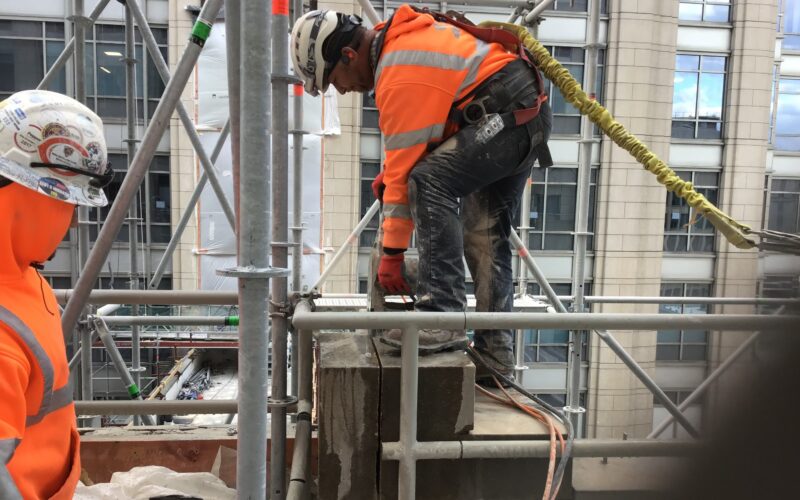
Since the day MILBURN opened in 2014, our motto has been “Safety is our Culture.” On our web site, you’ll see another one: Safety > Production. That “greater than” is intentional. Not “when it’s convenient.” Not “as long as we’re on schedule.” Greater than.
I want to talk about what that actually means, because in our industry, it’s the difference between a job that ends with a celebration and a job that ends with a phone call no one wants to make.
The biggest myth about demolition safety is that it lives on the job site. PPE, fall protection, a tidy work zone, of course those things matter. But by the time the first piece of equipment fires up, the riskiest decisions have already been made.
That’s why our crews don’t see a project for the first time on day one. Long before that, our estimating and operations teams perform our own site analysis and build a comprehensive demolition plan: how we’ll sequence the work, what equipment is right for the conditions, where the structural unknowns are, what the dust and noise profile will be, how the building behaves once load paths change. The National Demolition Association puts it well in their guidance to members: safety begins at the planning stage. We agree, and we plan accordingly.
This is the “due diligence” piece that shows up on our Why MILBURN page, but it’s really a safety practice in disguise. The cleanest, most efficient demolition is also the safest one, because we’ve already imagined the ways it could go wrong and engineered them out.
People sometimes ask what a “safety culture” actually consists of, day to day. At MILBURN, it’s a stack of small, repeatable habits that build on each other:
None of these are exotic. What’s different is that they’re non-negotiable. Not only do our superintendents and foreman have authority to pause work the moment something looks off but every member of our team has this right, and they use it. “Safety > Production” only means something when the production side is willing to lose an hour to protect a person.
MILBURN is a proud member of the National Demolition Association, and we use their tools the way they’re meant to be used: as a baseline our own program has to clear. The NDA Safety Manual is correlated to the OSHA Construction Standard (29 CFR 1926) and is a benchmark for safe practice in demolition. Their pre-start Engineering Survey, Demolition Safety Talks, Hazard Communication Plan, and Starting Out Right video series for new hires all feed directly into how we onboard people and how we kick off projects.
If you’re a general contractor, developer, or facility owner reading this, here’s the part that matters to you. In B2B construction, safety record is a primary qualification criterion. GCs evaluate demolition partners on EMR, OSHA recordables, and the depth of the underlying program. The wrong demolition contractor doesn’t just create a moral problem, they create schedule problems, insurance problems, and reputational problems that the whole project carries.
When we tell prospective clients that we put safety before production, we’re not asking them to take it on faith. We’re telling them how the planning will be done, how the crews will be trained, how the field will be supervised, and how we’ll respond when something unexpected shows up in the wall. We’re telling them, plainly, that the people on our job site are going home tonight.
That’s the standard we hold ourselves to. It’s also the standard our clients in Chicago, Tampa, and the rest of the country deserve from anyone they shortlist.
If you’d like to see how this approach translates to a specific project, we’d be glad to walk you through it. Reach out through our contact page, or learn more about how we approach work on the Why MILBURN page.
— James


