
By James Milburn, Managing Principal — MILBURN Demolition
Every demolition company will tell you they can knock a building down. Most can. What separates the firms doing complex commercial and institutional work from everyone else is what they’re willing to do once the building is mostly standing, mostly occupied, or has something strange and heavy buried inside it.
MILBURN was built to excel in both categories. While we can expertly and safely knock a building down, we built our reputation by taking on the jobs other contractors didn’t want — the ones with awkward access, sensitive neighbors, post-tensioned slabs, or a vault that was abandoned and forgotten about.
Today, specialty demolition is a core service line for us in both Chicago and Tampa. Here’s what it actually involves and why those jobs are harder than they look.
On our Specialty Demolition page we list the most common scopes we get called for: vault removal, chimney stack removal, elevator and escalator removal, cooling tower removal, fire escape removal, and water tower and water tank removals. And we also expand a little bit on the robotic demolition work that often makes the work possible. These jobs share a few traits that turn an ordinary demolition into a specialty problem:
This is the work that gets a building back into service, a hospital wing reopened, a high-rise lobby reborn, a manufacturing floor cleared for a new line, without forcing the owner to shut down the rest of the property.
A vault removal sounds simple until you’re standing in front of one. We’re talking about heavily reinforced concrete enclosures sitting inside existing structures, often with limited access. You can’t just bring in a big hammer; the project often won’t accommodate it. The work has to be selective, sequenced, and dust- and noise-controlled, and the debris has to come out through whatever pathway the building actually offers, not the one you wish it had.
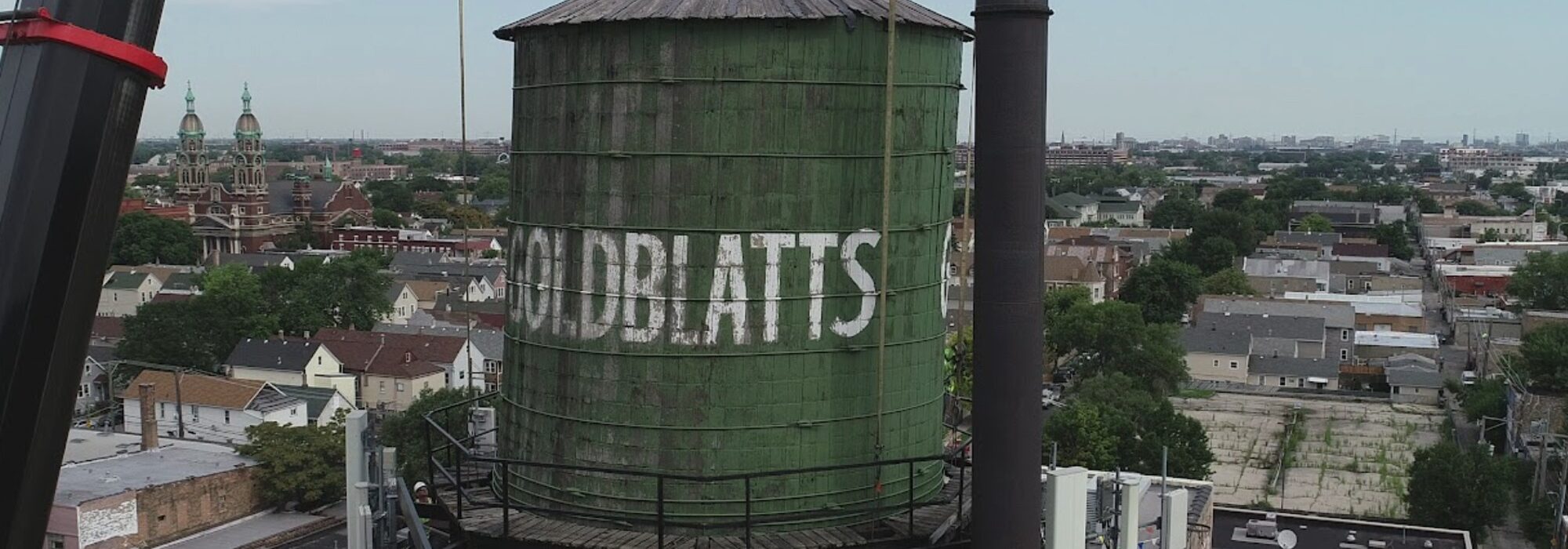
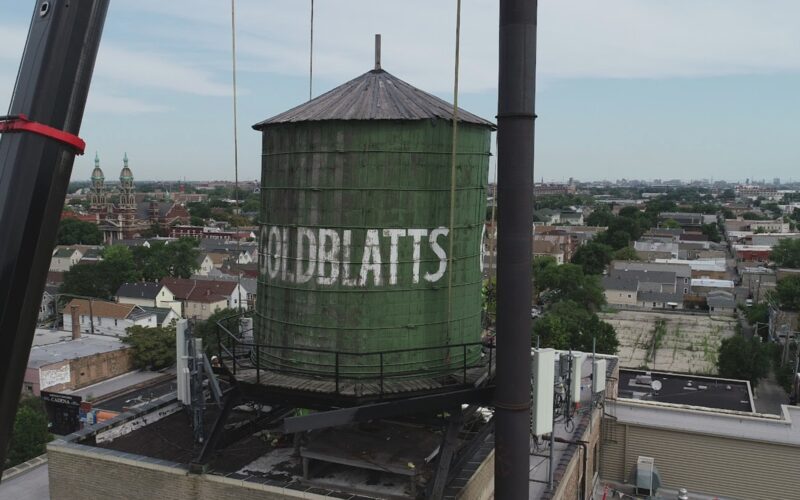
Chimney stacks present a different problem: you’re working at height, you’re working on a slender, often deteriorated structure, and you have to bring it down without damaging the buildings it leans against. Cooling towers add weight and water. Fire escapes add corrosion and unknown attachment conditions. Elevator and escalator removals add live shafts and mechanical systems you have to disable in the right order. Water tower and water tank removals add utility disconnects, environmental testing, and permits before you ever cut a bolt.
None of this is unsolvable. But each of these jobs requires a plan written by people who’ve done it before, executed by crews who’ve been trained on the specific hazards, and supported by equipment that’s actually appropriate for the environment.
Our investment in robotic demolition technology has been one of the biggest unlocks for our specialty work. Remote-operated, electric-powered robots can go places people can’t – confined spaces, structurally questionable floors, environments where exhaust fumes from a diesel machine would be a non-starter. They limit vibration and noise, they keep operators outside the immediate danger zone, and they let us hold a tighter tolerance on selective removal than we could with conventional equipment alone.
On the kinds of speciality projects we run, occupied buildings, sensitive environments, post-tensioned structures, high-rises with active tenants, robotics aren’t a marketing gimmick. They’re how we keep the schedule honest without giving anything back on safety.
Some of our favorite client feedback isn’t about a teardown. It’s about a job where MILBURN walked into a building, did something complicated, and walked back out without anybody outside the construction trailer noticing. Bulley & Andrews has called us out for “strong safety measures” and a “partnership mentality” on demanding scopes. McHugh has noted that we’ve performed “selective interior demolition to removal of structural elements in the middle of high-rise buildings”, most of it in occupied buildings and sensitive environments, and delivered “on time and on budget, and without surprises.” That “no surprises” part is the entire point of how we run specialty work.
We’d rather hear about it early than late. The earlier we’re looking at a complex scope, the more options we have to plan it safely and economically. Take a look at our Specialty Demolition page for the full scope of what we do, browse a few featured projects, or reach out through our contact page. If it’s tricky, expensive-looking, or makes another contractor wince, it’s probably the kind of work we built this company to do.
— James


